Human cells aren’t the same as a whole human.
“Tested in human cells” can sound like “tested in humans”. We pause there. Cells grown in a dish can tell us something useful without showing that a person will feel or function better.
GHK-Cu, MOTS-c and KPV give us three chances to practise that pause. The setting stays beside the finding, along with what we still don’t know.
A skin finding has its own boundary
GHK-Cu is a short peptide chain holding copper. In a lab study, it helped cultured skin cells make more collagen, the protein that gives skin structure. That’s a cell finding, not a measured change in someone’s face.
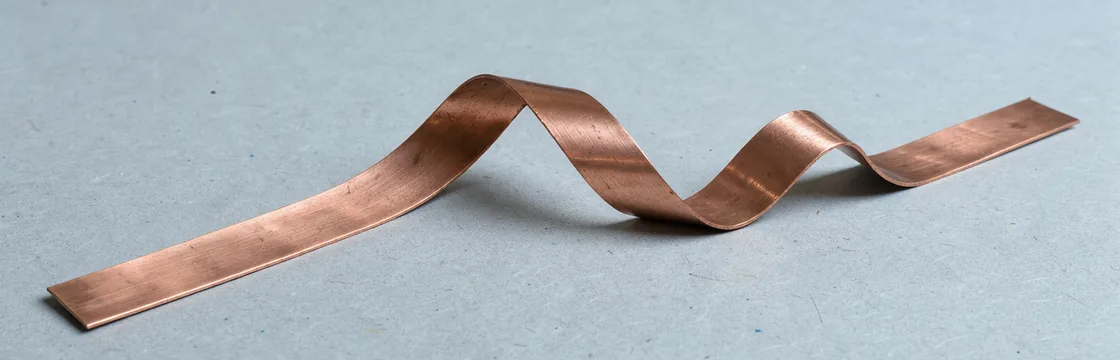
Copper makes the name tangible. This is the raw material, not GHK-Cu, a formulation or a picture of a biological effect.
A small trial tested skincare after laser skin treatment. Thirteen people completed it. The GHK-Cu group reported greater satisfaction. Assessments of redness, wrinkle scores and general skin quality did not find a statistically convincing benefit.
Both results deserve a place in the story. A trial this small can miss a real difference. Feeling more satisfied and showing a measured skin improvement are different outcomes. This small study on freshly treated skin can’t settle what happens on other skin.
It also can’t establish injection safety. The FDA raises concerns about immune reactions to injectable GHK-Cu, with little human safety information available. The way a substance enters the body matters to the question.
A mouse result stays a mouse result
In the first MOTS-c study, treated mice gained less weight on a high-fat diet and handled sugar better. That gives us something to investigate. It doesn’t give us a human average or a prediction for one person.
The FDA found no data from giving MOTS-c to people to judge benefit or safety. It also raises possible immune-reaction risks. Those are concerns, not harms measured in people.
A possible explanation for how something works can’t replace a missing human result. We leave the gap visible rather than guessing how large an effect might be.
A bowel experiment has a boundary too
In a KPV study, mice with bowel inflammation caused for the experiment had less inflammation. An encouraging result in those mice doesn’t answer a person’s question about bowel disease.
The FDA found no human studies of KPV. Human side effects remain unknown. Its review also raises possible immune reactions and clumping of the peptide; these aren’t measured rates of harm.
What we take away
These findings don’t need a shared score. They need their own unanswered questions. A licensed U.S. clinician is the route for a personal skin, blood-sugar or bowel concern.
For the reading, our rule is smaller: keep the finding and its limit together. The references let you follow both back to the source.